Cracks Spreading Across Your Concrete Driveway? Here's What's Causing It and How to Fix It
Quick Answer: Concrete driveway cracks usually come from freeze-thaw cycling, an under-compacted base, missing control joints, or soil movement beneath the slab. Hairline cracks under about 1/8 inch are typically cosmetic; cracks wider than 1/4 inch, cracks with one side higher than the other, or cracks that keep growing each winter usually point to a structural problem underneath. Minor cracks can be routed and sealed to keep water out before winter. Wider or uneven cracks need a professional look, since they often mean the base has shifted and simple crack filler won't fix what's actually wrong.
You pull out of the garage on a gray March morning and notice it: a crack that wasn't there last fall now runs halfway across the driveway, with a smaller one branching off toward the garage door. Neither was visible when the leaves were still on the trees. By spring, both have widened enough to catch the toe of a shoe.
That pattern is familiar if you've owned a concrete driveway in Northwest Ohio for more than a winter or two. Concrete handles compression well but fights tension poorly, and it sits on top of soil and gravel that both shift with moisture and temperature. When that movement outpaces what the slab can absorb, something gives. The crack itself isn't really the problem — it's a symptom of what's happening underneath, and figuring out the cause is what determines whether a tube of filler actually fixes it or just hides it for a season.
Why Concrete Driveways Crack in the First Place
Most driveway cracks trace back to one of a handful of causes. Often more than one is at work on the same slab at the same time.
Freeze-thaw cycling.
Water in pores and cracks expands about 9 percent when it freezes. Northwest Ohio winters bring dozens of freeze-thaw cycles, not one hard freeze, so existing cracks widen a little more each swing.
Under-compacted or uneven base.
A driveway is only as stable as what's underneath. Poorly compacted or uneven gravel base causes differential settling, stressing the concrete from below and producing irregular, diagonal cracking rather than straight lines.
Missing or poorly placed control joints.
Control joints give concrete's natural shrinking and expansion somewhere controlled to happen. Recommended spacing is roughly 8 to 12 feet on a 4-inch driveway — skip or space them wrong, and cracks appear randomly.
Clay soil movement.
Northwest Ohio's heavy clay swells when saturated and shrinks as it dries, pushing and pulling on the slab above, especially at the edges. Wet springs followed by dry summers make this cycle worse.
Heavy or concentrated loads.
A driveway built for cars can develop stress cracks under repeated weight from a delivery truck, RV, or equipment parked in one spot. The concrete may be sound — the load simply exceeds capacity.
Tree root intrusion.
Roots seeking moisture grow beneath driveway edges, lifting sections as they thicken or leaving voids that later collapse. Both crack the slab, though the pattern follows the root's path, not a straight joint.
Reading Your Cracks: Cosmetic vs. Structural
Not every crack means the same thing. How wide it is, which way it runs, and whether it's still growing tells you most of what you need to know before deciding what to do next.
Hairline and crazing cracks
Fine, web-like cracks that showed up soon after the driveway was poured are usually surface shrinkage — cosmetic, not structural. They don't typically widen much on their own.
Cracks under about 1/4 inch
Common on driveways more than a few years old, and generally just normal freeze-thaw movement at work. Worth sealing to keep water out, but not usually a sign the base is failing.
Cracks wider than 1/4 inch or with a visible offset
When one side of a crack sits noticeably higher than the other, or the gap has grown wide enough to catch a coin on its edge, the base underneath that section has likely shifted or settled. Filling the surface won't correct what's happening below it.
Cracks that keep spreading each winter
A crack that was two feet long last year and four feet long now, or one that's sprouted new branches, isn't stable. That progression usually means water is getting in, freezing, and doing a little more damage every winter it goes unaddressed.
Cracks running parallel to the driveway edge
These often point to soil movement or settling along the perimeter — especially where drainage is carrying water toward the slab instead of away from it.
What Road Salt Does to Cracked Concrete
Once a crack exists, deicing salt makes the freeze-thaw damage worse, not just at the crack itself but through the surrounding concrete. Chloride-based deicers lower the freezing point of water sitting in and around a crack, which pushes that section of concrete through more freeze-thaw cycles in a single winter than untreated areas nearby see. Research on deicing salt exposure documents this as scaling — a flaking or pitting of the surface layer, distinct from ordinary freeze-thaw cracking but frequently showing up right alongside it on driveways that get regular salt or ice-melt treatment.
Concrete mixed with an air-entraining admixture resists this kind of damage far better than concrete without it. Federal Highway Administration research on air entrainment found that a network of microscopic air bubbles built into the mix — typically 5 to 8 percent of the mix volume for freeze-thaw exposure — gives freezing water somewhere to expand into internally, relieving the pressure that would otherwise crack the surrounding paste. A driveway poured without enough air entrainment is more vulnerable to both freeze-thaw cracking and salt scaling starting the first winter. Mix design matters just as much as the pour itself.
How Professional Repair Actually Works
The right fix depends entirely on what's causing the crack. That's why an assessment usually comes before any repair method gets picked.
Routing and sealing
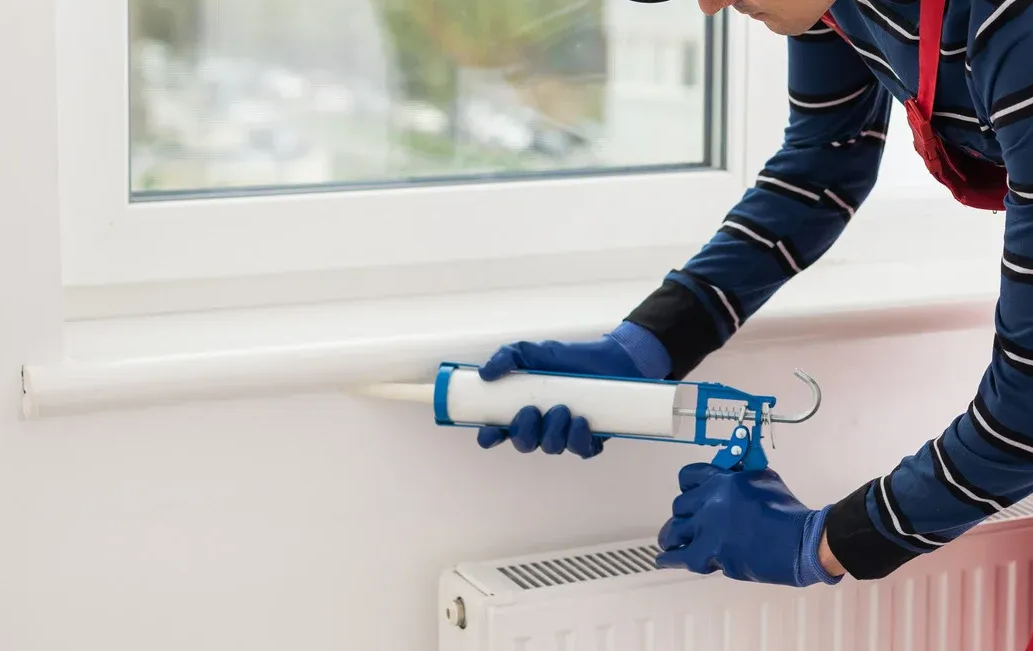
For stable hairline and narrow cracks, the crack gets widened slightly with a saw or grinder, cleaned out, and filled with a flexible polyurethane or epoxy sealant that moves with the concrete instead of pulling away during the next freeze-thaw cycle. This keeps water out of the crack but doesn't change what's happening below the slab.
Epoxy or polyurethane injection
For structural cracks where the concrete itself is still sound but has separated, a rigid epoxy or semi-rigid polyurethane resin gets injected under pressure to bond the crack from the inside, restoring some of the slab's original strength.
Slabjacking or mudjacking
When a section of driveway has settled or sunk because of a void beneath it, a cementitious or polyurethane foam mixture gets pumped underneath the slab to fill the void and lift the concrete back to level. No demolition needed — this fixes uneven, sunken sections in place.
Panel removal and replacement
When a section is too cracked, too uneven, or too far gone to repair economically, cutting it out along the nearest control joints and pouring a new panel that matches the surrounding grade and finish is usually the more durable answer. This shows up most often on older driveways where base failure and heavy cracking have piled up in the same spot.
Tip: Reseal a concrete driveway every two to three years, more often in spots that get heavy deicer use. A fresh sealer coat keeps water and chloride salts out of the surface pores in the first place, which cuts down on both the freeze-thaw pressure inside the slab and the salt scaling that speeds it along.
Preventing new cracks starts with the same factors that cause them. Grading the driveway and surrounding soil so water runs away from the slab, rather than pooling against it, cuts down on freeze-thaw saturation and clay soil movement at the edges. Choosing a calcium chloride or calcium magnesium acetate deicer over straight rock salt reduces the chemical load on the concrete surface — some deicers are considerably harder on cured concrete than others. And keeping heavy vehicles off any one section of driveway on a regular basis avoids the kind of concentrated-load cracking that builds up slowly, year after year, from the same weight hitting the same spot.
Warning: A crack that widens noticeably after a heavy rain, runs alongside a spot that feels soft or hollow underfoot, or appears where the driveway meets the garage slab can point to a void or drainage problem beneath the concrete rather than ordinary wear. Filling that kind of crack without addressing what's underneath it usually means redoing the repair within a year or two — and in some cases the section keeps settling until it needs to be replaced anyway.
What This Means for Your Driveway Long Term
A driveway that develops a crack or two after several Ohio winters isn't a sign anything went wrong. It's ordinary concrete responding to freeze-thaw cycling, soil movement, and the loads it carries every day. What separates a driveway that lasts decades from one that needs early replacement is how those first cracks get handled. A hairline crack sealed before its first full winter tends to stay a hairline crack. The same crack left open lets water in, and water plus freeze-thaw cycling is exactly what turns a cosmetic issue into a structural one. Reading the crack correctly — how wide it is, which direction it runs, whether it's actively growing — is what determines the next step, and that's worth an experienced set of eyes before deciding whether a tube of filler will do or something more needs to happen underneath.
Frequently Asked Questions
How wide does a crack have to be before it's a structural problem?
Cracks under 1/4 inch with no vertical offset are usually manageable with routing and sealing. Beyond that, or with any offset, the base has likely shifted, requiring real structural repair.
Can you pour new concrete over a cracked driveway?
A thin overlay poured over cracks rarely lasts, since movement in the old slab telegraphs through the new layer within a season. Replacing panels or fixing the base holds longer.
Does sealing a driveway actually stop cracks from spreading?
It won't reverse structural damage, but it slows hairline and minor cracks by keeping water from soaking in and freezing. Resealing every two to three years keeps cracks from growing.
Why do driveway cracks seem to get worse every winter in Ohio?
Every freeze-thaw cycle lets water into a crack, and it expands about 9 percent as it freezes, widening the crack. Ohio winters bring dozens of cycles, worsening cracks if unsealed.
Is it normal for a new concrete driveway to crack in the first year?
Some fine shrinkage cracking in the first year is normal as concrete cures, especially near control joints. Wider cracks, or running from joints, may point to base or mix issues.
What's the difference between crack filling and slabjacking?
Crack filling addresses the gap when the slab is level and stable. Slabjacking lifts a section that's sunk from a void underneath. You might need one, the other, or both.
Secure Long-Term Driveway Performance With Expert Concrete Repairs
Request a driveway assessment from TrueSet Construction LLC
and let a member of our team evaluate your specific cracking pattern, inspect the condition of the base, and recommend whether sealing, injection repair, slabjacking, or panel replacement is the right solution for your driveway. With 10
years of experience serving homeowners and businesses in Lima, Ohio, TrueSet Construction LLC
uses premium concrete materials and mix designs engineered to withstand the freeze-thaw cycles and road salt common throughout the region. We provide dependable
concrete repair and installation
services for both residential and commercial properties, helping restore strength, appearance, and long-term performance. Reach out today for a professional assessment and a clear recommendation before the next freeze-thaw season causes additional damage.