Concrete Driveway Heaving or Sinking After Winter? What's Happening Underneath and How to Fix It
Frequently Asked Questions
How wide does a crack have to be before it's a structural problem?
Cracks under 1/4 inch with no vertical offset are usually manageable with routing and sealing. Beyond that, or with any offset, the base has likely shifted, requiring real structural repair.
Can you pour new concrete over a cracked driveway?
A thin overlay poured over cracks rarely lasts, since movement in the old slab telegraphs through the new layer within a season. Replacing panels or fixing the base holds longer.
Does sealing a driveway actually stop cracks from spreading?
It won't reverse structural damage, but it slows hairline and minor cracks by keeping water from soaking in and freezing. Resealing every two to three years keeps cracks from growing.
Why do driveway cracks seem to get worse every winter in Ohio?
Every freeze-thaw cycle lets water into a crack, and it expands about 9 percent as it freezes, widening the crack. Ohio winters bring dozens of cycles, worsening cracks if unsealed.
Is it normal for a new concrete driveway to crack in the first year?
Some fine shrinkage cracking in the first year is normal as concrete cures, especially near control joints. Wider cracks, or running from joints, may point to base or mix issues.
What's the difference between crack filling and slabjacking?
Crack filling addresses the gap when the slab is level and stable. Slabjacking lifts a section that's sunk from a void underneath. You might need one, the other, or both.
Quick Answer: If your concrete driveway rises, dips, or tilts after winter, it's almost always responding to what happened underneath it, not a flaw in the slab itself. Freezing groundwater and saturated clay soil push and pull on the ground beneath the concrete, and once that support becomes uneven, the slab follows it. Small seasonal shifts that return close to level are usually cosmetic. A section that stays lifted, keeps sinking further each year, or creates a real trip hazard points to a subgrade problem that needs correcting at the source, not just patching on the surface.
What Winter Movement Actually Looks Like
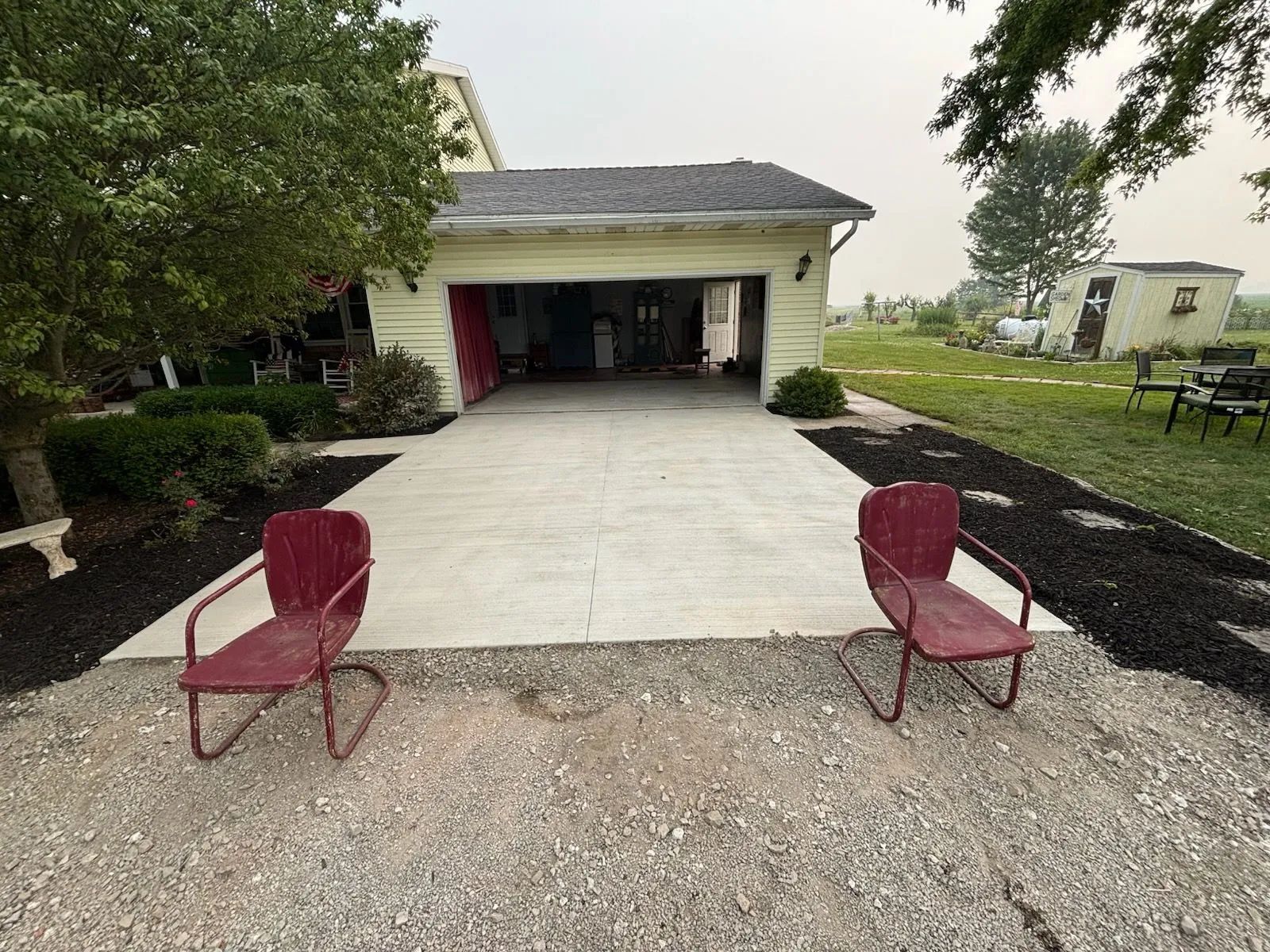
You notice it in early spring, usually. A section of driveway near the garage apron sits higher than it did in the fall. Or the opposite happens, and a slab that used to sit flush with its neighbor has dropped half an inch and now catches water every time it rains. Sometimes it shows up as a slope that suddenly runs the wrong way, sending runoff toward the garage instead of away from it. None of these are unusual for Northwest Ohio driveways. This is one of the most common calls a concrete contractor gets every spring, and it rarely means the concrete itself failed. The slab is rigid. It moved because the ground under it moved first.
Heaving and sinking are opposite symptoms with related causes. Heaving pushes a slab or a section of a slab upward, often unevenly, so one edge or corner ends up higher than the rest. Sinking does the reverse, dropping a slab or a portion of it below its original grade. It is common to see both on the same driveway, with one panel heaved near a joint and another settled a few feet away, because the soil conditions driving each problem can vary panel to panel depending on drainage, shade, and how the base was compacted when the driveway went in.
Why It Happens: Freeze, Thaw, and What's in the Soil
Northwest Ohio's frost depth typically runs three to three and a half feet in a normal winter, which means the ground beneath a driveway freezes hard for a stretch of months almost every year. When soil below the slab holds moisture and that moisture freezes, it expands and can form layers of ice, called ice lenses, that physically lift the ground and everything resting on it. As temperatures swing back above freezing, that ice melts and the soil settles again, but it rarely settles back to exactly where it started. Repeat that cycle for a full winter, and even a well-built driveway can end up with visible high spots and low spots by April.
Soil type makes a real difference in how much movement you see. Much of the clay-heavy soil common across this part of Ohio drains slowly and holds water close to the surface, which gives freeze-thaw cycles more to work with. Clay also shrinks as it dries out and swells again once it's saturated, so a driveway sitting on clay subgrade can shift with moisture changes even outside of winter, though the effect is strongest during the freeze-thaw months. A sandy or well-drained gravel base under the slab moves far less, because water passes through it instead of pooling and freezing in place.
The other major factor is what was underneath the concrete to begin with. A driveway poured over a properly compacted granular base sheds water and resists settling because the base material stays stable through wet and dry cycles. A driveway poured over soil that wasn't compacted correctly, or over fill that later washed out or eroded, is sitting on an unpredictable foundation. Once a void opens up under a slab, whether from erosion, a leaking downspout draining under the edge of the driveway, or simple settling of loose fill, that section has nothing solid to rest on and it sinks the next time it carries weight.
Heaving Versus Sinking: Different Mechanics, Different Fixes
It helps to think about these as two different problems that happen to show up on the same surface. Heaving is a pressure problem. Something below the slab, usually freezing moisture or swelling clay, is pushing up harder than the concrete and its base can resist. The fix generally focuses on getting water and moisture away from that soil so freeze-thaw has less to act on, along with correcting the base under the affected panel so it isn't sitting on saturated ground.
Sinking is a support problem. The slab has lost the ground it was originally resting on, whether from a void, erosion, or a base that was never compacted to spec. The fix there focuses on restoring solid, evenly compacted support under the slab, which sometimes means removing and repouring a section rather than just addressing what's happening on top. Trying to solve a sinking problem with surface patching, or a heaving problem by just grinding down the high spot, treats the symptom without touching the cause, which is why those fixes rarely hold past the next winter.
Is It Cosmetic or Something to Get Looked At?
Most seasonal movement is minor and mostly cosmetic. A slight difference in height between two driveway panels, a hairline separation at a control joint, or a small lip that's more visual than functional usually isn't urgent. But a few signs mean the issue underneath is still active: a section that keeps moving further each year instead of stabilizing, a height difference sharp enough to catch a shoe or a shovel blade, standing water pooling against the foundation because the slope now runs the wrong direction, or a slab edge that rocks or flexes when a vehicle drives over it. The longer any of those go unaddressed, the more base material tends to wash out or erode underneath.
Tip: Walk your driveway after the first hard thaw each spring and run your hand or a level across any joint where you notice a height change. A quarter inch of difference is worth noting and watching. A full inch or more, or a joint that's visibly widened since fall, is worth having someone look at before another freeze-thaw cycle works on it.
A driveway that heaves and settles back close to its original position each year, without a growing gap or crack, is generally just responding normally to the season. One that trends worse every year, even slightly, is telling you the soil or drainage issue causing it hasn't been resolved.
What a Lasting Fix Actually Involves
Correcting driveway movement starts with figuring out why that particular section is moving, not just leveling what's visible on top. For a sunken panel, that usually means removing the affected concrete, correcting the base underneath with properly compacted granular material, and repouring with attention to drainage so water isn't allowed to collect and undermine the new base the same way it did the old one. For heaving tied to poor drainage, correcting grading and moving water away from that section of subgrade often does more long-term good than any work on the slab itself, because it removes the moisture that freeze-thaw needs to cause the problem in the first place.
Control joints matter here too. A driveway with joints placed and cut correctly gives the concrete planned points to move slightly without cracking randomly across a panel. If joints were spaced too far apart or weren't cut to the right depth when the driveway was originally poured, freeze-thaw stress has fewer places to release safely and tends to show up as a crack running through the middle of a slab instead.
Regrading and Drainage Corrections
Water that pools against a driveway edge or drains toward the garage instead of away from it is often the real root of a heaving problem, more than the freezing itself. Adjusting the grade along the driveway edge, extending a downspout that's currently dumping water right at the slab's edge, or adding drainage where water naturally collects can reduce how much moisture reaches the soil under the concrete each winter. Less moisture in that soil means less material for ice lenses to form from, which means less pressure pushing up on the slab.
Base Correction Before Repouring
When a section needs to come out and be replaced, the base preparation underneath matters more than the pour itself for how long the repair lasts. A compacted granular base, built to the depth and density the project calls for, gives the new concrete something stable to sit on through wet seasons and dry ones. Skipping or shortcutting that step is the single most common reason a repaired section starts sinking again within a few years.
Preventing Repeat Movement
Once a section has been corrected, keeping it that way comes down to managing water. Downspouts and gutters should discharge well away from the driveway edge, not directly onto the soil beside it. Grading along the driveway should slope away from the slab rather than toward it, so rain and snowmelt don't sit against the concrete and soak into the base. Sealing cracks and joints as they appear keeps surface water from working its way down into the subgrade in the first place, which matters most heading into the coldest months of the year when whatever moisture is already in that soil is what freeze-thaw will act on.
Warning: Ignoring a growing crack or a widening joint through multiple winters lets water keep working its way into the base every freeze-thaw cycle, which tends to turn a minor cosmetic issue into a section that eventually needs full replacement instead of a targeted repair.
Regular attention in fall, before the ground freezes for the season, is the most effective single habit for limiting how much movement you see the following spring.
Frequently Asked Questions
Does every heaved or sunken section need to be replaced?
Not necessarily. Sections that move slightly and settle back near level each year often just need better drainage management around them. Sections that keep worsening, or that have visible voids or cracking, typically need the affected concrete removed and the base corrected before repouring.
Can a brand-new driveway heave or sink?
Yes, especially in its first couple of winters if the base wasn't compacted to spec or if grading around the new slab hasn't fully settled yet. This is one reason base preparation and proper compaction matter as much as the quality of the pour itself.
Is heaving worse on driveways than sidewalks or patios?
Driveways carry vehicle weight and are usually wider and more exposed to sun and shade variation across their length, which can make movement more visible than on a narrower walkway. The underlying causes, freeze-thaw and soil moisture, are the same across all flatwork.
How can I tell if a raised joint is from heaving or from a tree root?
Heaving tends to affect a wider area evenly and often follows a pattern near drainage paths or shaded sections that stay wet longer. A root-related lift is usually more localized to one spot near where a root crosses under the slab and often comes with visible cracking radiating from that point.
Understanding Seasonal Driveway Movement for the Long Term
Concrete driveways naturally respond to changing ground conditions, especially in regions like Lima, OH, where freeze-thaw cycles and moisture-rich soils create constant pressure beneath the slab. Recognizing whether movement is temporary or the beginning of a larger support issue helps prevent unnecessary repairs while allowing underlying drainage or soil problems to be addressed before they become more significant. Careful observation from one season to the next usually reveals whether a driveway has stabilized or continues to change.
With 10
years of experience, TrueSet Construction LLC
understands how proper base preparation, drainage management, and soil conditions influence the long-term performance of concrete surfaces. Looking beyond the visible crack, dip, or raised edge provides a clearer picture of why movement occurred and what type of repair is most appropriate. When the supporting ground remains stable and water is effectively managed, concrete is far more likely to withstand future winters with minimal seasonal movement.